
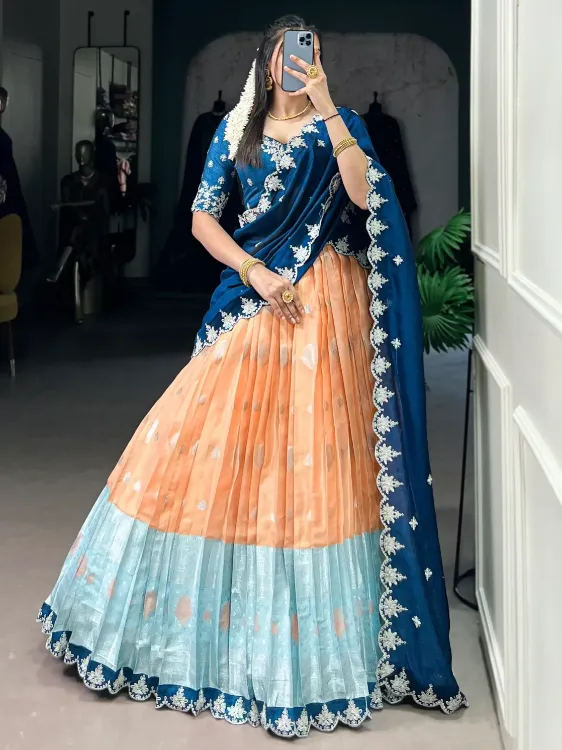
A border that looks lovely over the crook of your arm can disappear completely in a stack of shoulder pleats. Getting it to show is half the fun of wearing a Half Saree Lehenga. The skirt already gives you the fullness of the outfit. The dupatta does the work of a pallu, the loose end of a saree that falls over the shoulder. With a skirt, blouse and dupatta you already own, you can try the same diagonal drape at home.
Learn the Route First
Fasten your skirt and blouse, then make one loose pass with the dupatta before reaching for a pin. This version begins at your left hip and finishes on your left shoulder. Follow your own left side, even if the mirror makes you hesitate. If your family drapes it on the other side, reverse the directions. For this first pass, concentrate on where the fabric travels around your body. The pleats and the length can wait until the second try.
-
Tuck at the left hip
-
Wrap across the back
-
Cross from the right hip
-
Pleat at the left shoulder
-
Let the end fall
Pick the Border That Shows
A deep red Chanderi skirt with a Kalamkari print makes a good example of how to choose the edge you want to show. Its matching blouse repeats the print on the sleeves, while the mustard georgette dupatta has a zari lace border. Lay the dupatta across your arm with the finished side facing out. Fold the cloth once and see where the gold line lands. Keep that edge uppermost as you lift the fabric so the border frames the blouse.
Anchor the Fabric at Your Hip
Tuck a corner just behind your left hip, leaving the skirt fastening easy to reach. Smooth the cloth gently around your back until it reaches your right hip. Only a short section needs to sit inside the waistband. Pushing a handful of fabric into one spot can leave a bump under a light skirt. If the tuck shifts as you turn, check that the skirt sits securely at your waist. A firmer waistband may solve the problem without another pin.
Set the Pallu Length
Carry the fabric from your right hip across your front and rest the free end on your left shoulder. Before making pleats, glance over your shoulder to see where the end falls. Start around hip level, then slide a little fabric forward or back until you like the length. If you have tassels, let them hang clear of the waist ties. You can use the knot of the ties as a reference for where you want the lowest tassel to fall.
Give Heavy Lace Some Space
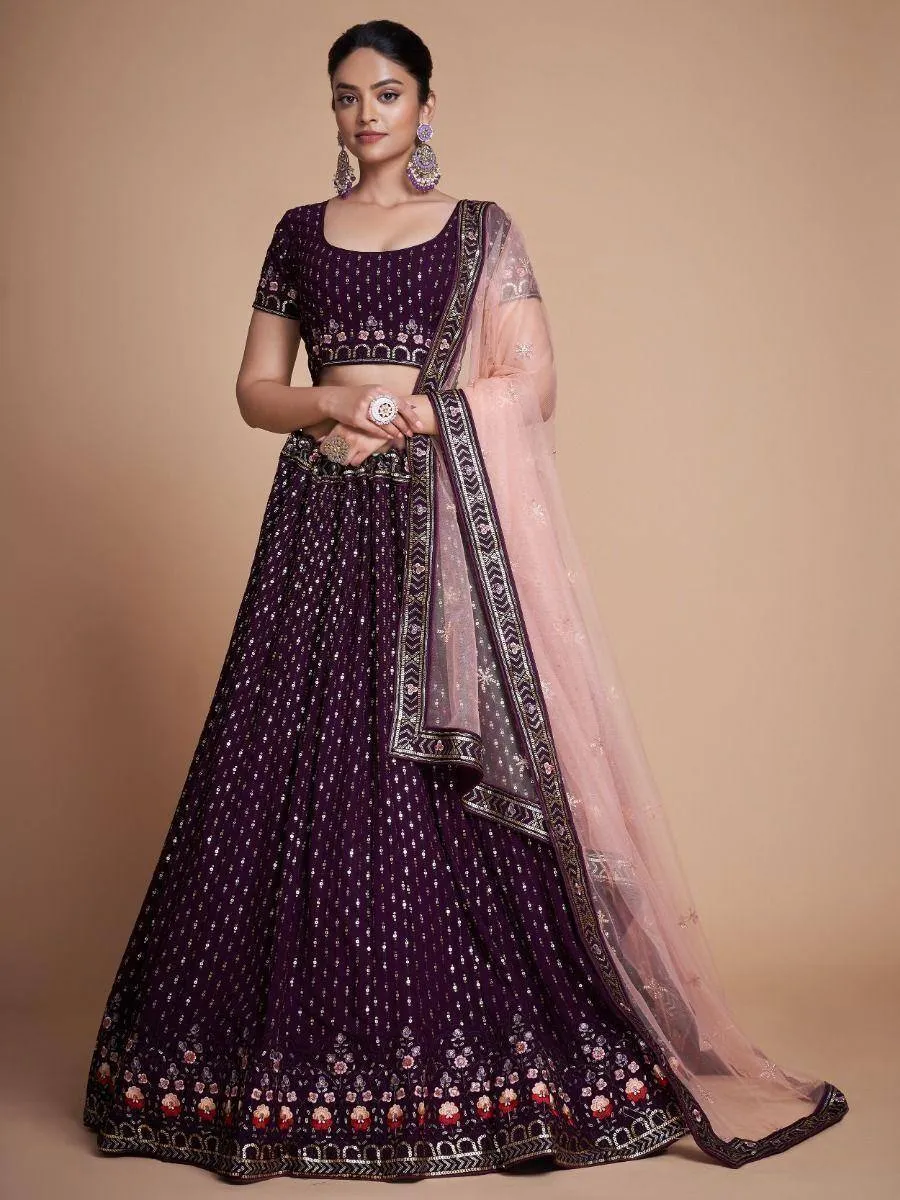
A soft scarf usually gives you room to try several folds. An embellished one may look better with fewer. A purple Designer Lehenga Choli pairs a shaded georgette skirt with a net dupatta edged in heavy lace and dotted with sequins. Folding that lace over itself several times puts a stack of trim on the shoulder. Try two broad folds and leave the outer lace edge visible. Let the net open out below the collarbone so the sequins still show.
Secure the Shoulder Comfortably
With the folds resting on your shoulder, reach forward as though passing a bowl across the table. If the diagonal edge pulls against your neck, give it a little slack at your right hip. Once you can reach comfortably, fasten the folds near the shoulder seam with a small safety pin. Work from the underside of the blouse, catch a firm part of the fabric and close the pin clear of any decorative threads. Let your arm drop and try that reach again.
Decide How Much to Show
Once the shoulder is secure, the folds below it can still open into a fan. With a printed blouse, keep the folds close together across the front if you want the print to show. A plain blouse gives you space to spread the fabric wider and let the border run in a long diagonal. Look down at the edge near your right hip. If the reverse of the lace is showing, turn that edge out and smooth it upwards with your palm.
Conclusion
The next time someone in your family wears a drape you admire, ask them to show you the shoulder fold while you do yours beside them. You may discover that the detail you liked was a pleat turned outwards or a pallu hanging a little lower than yours. Then swap places and arrange the folds on their shoulder. Feeling how much cloth they leave loose at the waist makes the movement easier to remember when you’re dressing on your own.
