Introduction
In today’s fast-paced and competitive retail landscape, data science is the leading technology that shapes how businesses operate and how customers experience shopping. By leveraging vast amounts of data, advanced analytics, and machine learning algorithms, retailers can now gain deep insights into customer behaviour, optimise operations, and provide personalised experiences. This article explores the critical role of data science in retail and how it is revolutionising the shopping journey.
Understanding Customer Behaviour
One of the most significant impacts of data science in retail is its ability to analyse and understand customer behaviour. Retailers collect data from multiple sources, including online browsing patterns, purchase history, loyalty programs, and social media interactions. Data science techniques, such as clustering and segmentation, allow businesses to identify distinct customer groups based on preferences, buying habits, and demographics.
For instance, in Kolkata, business strategists who have completed a data science course in Kolkata use predictive analytics to forecast future purchasing trends, thereby helping retailers stock the right products at the right time. Recommendation systems powered by machine learning algorithms enhance the shopping experience by suggesting products tailored to individual preferences. Companies like Amazon and Netflix have set the benchmark for this, creating highly personalised customer journeys that drive sales and customer loyalty.
Optimising Inventory Management
Effective inventory management is a cornerstone of retail success. Overstocks and stockouts can lead to significant financial losses and dissatisfied customers. Data science provides tools to optimise inventory by predicting demand, analysing seasonal trends, and monitoring real-time sales data.
For example, predictive models can estimate future product demand based on historical sales and external factors like weather or market trends. This ensures that shelves are stocked with items customers are likely to buy while reducing waste. Walmart, a pioneer in retail data science, employs advanced analytics to manage its vast inventory across thousands of stores, ensuring seamless operations and cost savings.
Enhancing Pricing Strategies
Dynamic pricing, an approach where prices are adjusted in real-time based on demand, competition, and other factors, is another area where data science plays a crucial role. A complex discipline of business strategizing, this area is best handled by experienced business analysts or those who have the learning from an advanced data science course. Machine learning models analyse market data, competitor pricing, and customer behaviour to determine optimal price points that maximise revenue and maintain competitiveness.
For example, e-commerce platforms like eBay and Alibaba utilise dynamic pricing to stay ahead in the market. These platforms monitor billions of data points daily, enabling them to offer competitive prices that attract customers while maintaining profitability.
Personalising the Customer Experience
Personalisation has become a key differentiator in the retail industry, and data science is at the heart of this transformation. By analysing individual customer data, retailers can offer tailored recommendations, targeted promotions, and customised shopping experiences.
Take Starbucks as an example. Through its mobile app, Starbucks collects data on customer preferences, order history, and location. This data is then used to deliver personalised rewards, offers, and product recommendations. The result is a highly engaging and satisfying customer experience that drives loyalty.
Improving Customer Service
Data science is also enhancing customer service in retail. Natural language processing (NLP) and machine learning are used to power chatbots and virtual assistants, providing instant support to customers, addressing queries and resolving issues efficiently. This improves customer satisfaction and also reduces the workload on human support teams.
Retailers like Sephora use AI-driven chatbots to assist customers in selecting products, offering beauty tips, and scheduling in-store appointments. By integrating these technologies into their platforms, retailers who have taken an advanced data science course and such technical courses can ensure seamless and consistent customer support.
Revolutionising Marketing Strategies
Data science has transformed marketing in retail, enabling more effective and targeted campaigns. Retailers can analyse customer data to understand which marketing strategies resonate most with their audience. This is especially important for businesses operating in cities where the competition is very high. Taking a data science course in Kolkata that covers predictive analytics helps business analysts in the city identify high-value customers and those at risk of churn, allowing businesses to take proactive measures.
Email campaigns, social media ads, and loyalty programs are now crafted using data-driven insights, for targeted messaging. This increases the effectiveness of marketing efforts and improves return on investment (ROI).
Enhancing In-Store Experiences
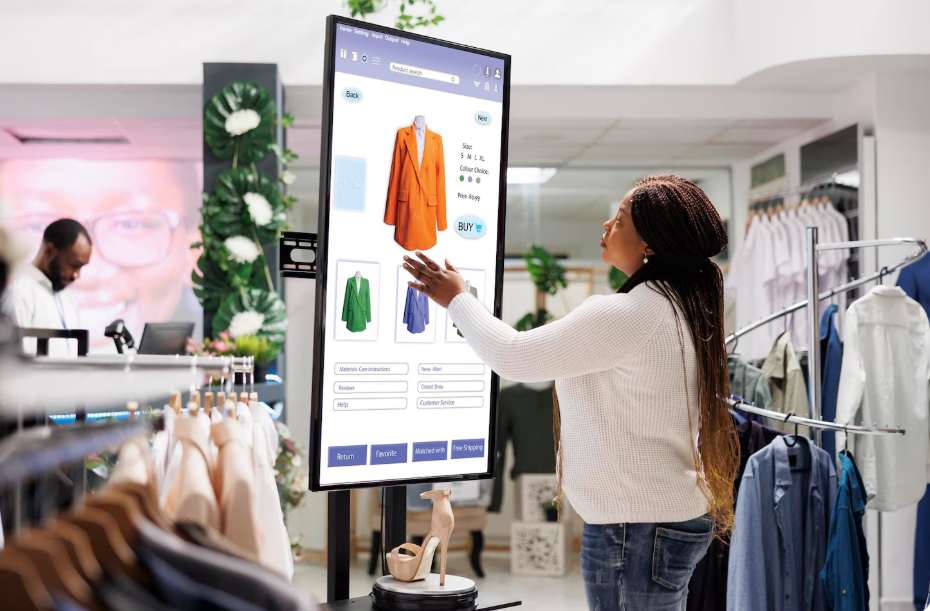
While much of the focus is on online retail, data science is also transforming brick-and-mortar stores. Technologies such as computer vision and IoT devices enable retailers to track customer movement within stores, understand shopping patterns, and optimise store layouts.
For example, heatmaps generated from in-store data can highlight high-traffic areas, guiding product placement decisions. Self-checkout systems and cashier-less stores, like Amazon Go, use data science to create frictionless shopping experiences, reducing wait times and enhancing customer convenience.
Sustainability and Waste Reduction
Data science is playing a crucial role in making retail more sustainable. By predicting demand more accurately, retailers can reduce overproduction and waste. Additionally, data-driven insights help optimise supply chains, minimising environmental impact.
Companies like Unilever and Patagonia are leveraging data science to track their carbon footprints, optimise energy use, and implement sustainable practices across their operations. These efforts not only benefit the environment but also resonate with eco-conscious consumers.
Challenges and Ethical Considerations
Despite its many benefits, the application of data science in retail comes with challenges. Data privacy and security are key concerns, as retailers collect and store vast amounts of sensitive customer information. Ensuring compliance with regulations like GDPR and CCPA is critical to maintaining customer trust and is a subject covered in the legal topics included in any professional-level data science course.
Moreover, biases in data and algorithms can lead to unintended consequences, such as unfair pricing or discriminatory practices. Retailers must adopt ethical practices and transparent algorithms to ensure fairness and accountability.
The Future of Data Science in Retail
As technology continues to advance, data science will become even more relevant in retail. Advances in artificial intelligence, machine learning, and IoT will enable even deeper insights and more innovative solutions. Augmented reality (AR) and virtual reality (VR), powered by data science, are already being explored to create immersive shopping experiences.
The integration of omnichannel strategies, where online and offline experiences seamlessly merge, will further enhance the shopping journey. Data science will remain at the core of this transformation, driving innovation and ensuring that retail stays ahead in a rapidly changing world.
Conclusion
Data science is revolutionising the retail industry, the way businesses operate and how customers shop. Business professionals who have the learning from a data science course in Kolkata are relying on advanced analytics such as predictive analytics to evolve effective business strategies. From understanding customer behaviour to optimising operations, personalising experiences, and ensuring sustainability, the applications of data science are vast and impactful. As retailers continue to embrace data-driven strategies, the shopping experience will become increasingly seamless, engaging, and tailored to individual needs, setting the stage for a future where data science and retail go hand in hand.
BUSINESS DETAILS:
NAME: ExcelR- Data Science, Data Analyst, Business Analyst Course Training in Kolkata
ADDRESS: B, Ghosh Building, 19/1, Camac St, opposite Fort Knox, 2nd Floor, Elgin, Kolkata, West Bengal 700017
PHONE NO: 08591364838
EMAIL- [email protected]
WORKING HOURS: MON-SAT [10AM-7PM]