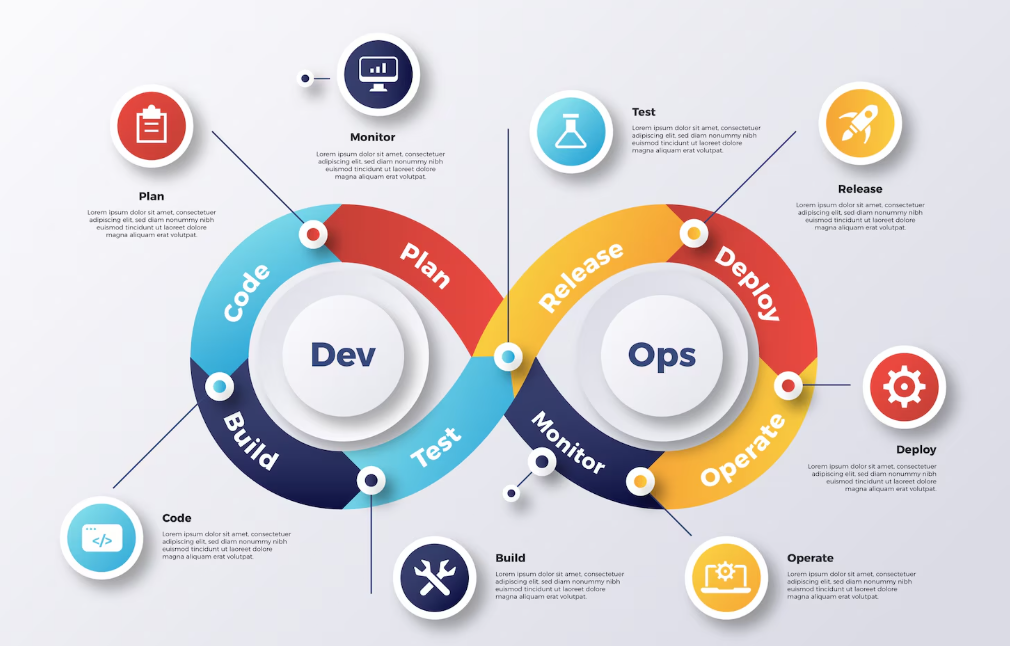
Imagine a relay race where speed, precision, and coordination determine victory. Each runner passes the baton flawlessly, maintaining rhythm and momentum. In software delivery, the deployment pipeline serves as that perfectly timed relay—connecting development, testing, and deployment in a continuous, streamlined flow. It ensures that every piece of code moves smoothly from conception to production without chaos or bottlenecks.
The deployment pipeline isn’t just about automation; it’s about building trust between systems and teams. It replaces manual interventions with consistency, speed, and reliability—qualities every modern business demands.
The Concept of Flow in Modern Development
In traditional development, software releases were like freight trains—massive, infrequent, and hard to control. A single delay could derail an entire project. DevOps transformed this paradigm, making software delivery resemble a well-coordinated assembly line instead.
The deployment pipeline embodies this new way of working. It begins with a developer’s commit and ends with that code running successfully in production. Every step—building, testing, staging, and deploying—forms part of this journey. The smoother the flow, the faster innovation reaches users.
Professionals trained through a DevOps course in Pune often learn to visualise this flow, spotting inefficiencies and automating repetitive steps to ensure that software travels from idea to impact seamlessly.
Automation as the Engine of Delivery
Automation is the heartbeat of the deployment pipeline. By removing human error, it accelerates delivery while maintaining accuracy. Continuous Integration (CI) ensures that every code change merges into the main branch safely, while Continuous Delivery (CD) automates testing and deployment to staging or production.
Think of automation as a self-driving car—it doesn’t just move faster; it navigates intelligently, correcting itself when obstacles appear. Every automated step, from compiling code to running unit tests, reduces friction and frees engineers to focus on innovation instead of firefighting.
Testing as the Gatekeeper of Quality
Quality assurance is no longer a final checkpoint—it’s woven throughout the deployment pipeline. Automated tests act as vigilant gatekeepers, verifying code at every stage. Unit tests check logic, integration tests confirm system compatibility, and regression tests ensure that new features don’t break existing ones.
This constant vigilance is what makes modern software delivery resilient. Teams don’t have to fear rapid releases because the pipeline’s testing layers continuously validate quality. For businesses operating in high-demand markets, this reliability isn’t optional—it’s essential for survival.
Feedback Loops and Continuous Improvement
The best pipelines are not static—they evolve through feedback. Each deployment generates data about build times, failure rates, and performance. DevOps teams use this feedback to refine their process, eliminate delays, and strengthen weak points.
This mirrors the philosophy of continuous learning. Just as developers iterate on their code, organisations iterate on their pipelines. Over time, this creates a culture of relentless improvement, where speed doesn’t compromise stability.
Structured learning environments, such as those offered by a DevOps course in Pune, help professionals master this mindset—teaching them how to interpret feedback, optimise automation, and build pipelines that get smarter with every release.
The Business Impact of Efficient Pipelines
Behind every high-performing software company lies a mature deployment pipeline. It allows for faster time-to-market, better product stability, and happier teams. When updates roll out smoothly and predictably, companies can respond to customer feedback swiftly and maintain a competitive edge.
The pipeline becomes more than a technical framework—it’s a business enabler. By aligning technology with organisational goals, it turns DevOps from a buzzword into a measurable advantage.
Conclusion
The deployment pipeline symbolises the heart of DevOps culture—a rhythm of automation, feedback, and improvement that drives innovation forward. It bridges the gap between creativity and execution, allowing ideas to transform into user-ready solutions with precision and reliability.
For professionals eager to master this discipline, understanding pipelines is more than a skill—it’s a mindset. Through structured learning and hands-on experience, anyone can learn to design systems that deliver excellence at scale.
In the same way a relay race depends on seamless baton passes, the success of modern software delivery depends on flawless flow—and the deployment pipeline is the ultimate enabler of that harmony.